AI gadgets for home are becoming essential as smart devices transform everyday living. Artificial Intelligence is no longer confined to apps and software—it’s now embedded in the physical devices we use every day. From smart speakers to AI-powered security systems, modern homes are becoming smarter, safer, and more efficient.
In this guide, we’ll explore the best AI gadgets you can use at home, how they work, and how they can improve your daily life—whether through automation, convenience, or security.
Why AI Gadgets Are Becoming Essential
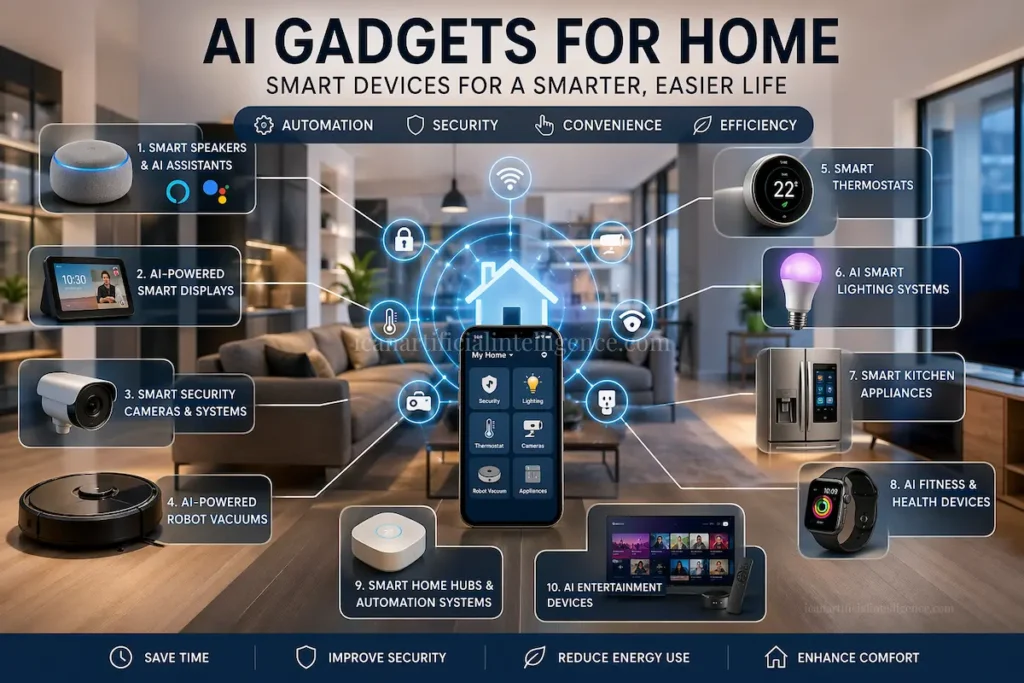
AI gadgets combine machine learning, sensors, and connectivity to automate tasks and adapt to user behavior.
They help you:
- Save time on daily chores
- Improve home security
- Reduce energy consumption
- Enhance comfort and convenience
As AI continues to evolve, smart homes are becoming the new standard of modern living.
1. Smart Speakers & AI Assistants
Smart speakers are often the entry point into a smart home ecosystem.
Popular Examples:
- Amazon Echo
- Google Nest Audio
What They Can Do:
- Answer questions
- Control smart devices
- Set reminders and alarms
- Play music and news
Why They Matter:
They act as a central control hub for your entire smart home.
2. AI-Powered Smart Displays
These devices combine voice assistants with visual interfaces.
Features:
- Video calls
- Recipe guides
- Home monitoring
- Entertainment
Use Case:
Perfect for kitchens and living rooms where both voice and visuals are useful.
3. Smart Security Cameras & Systems
Home security has been transformed by AI.
Capabilities:
- Motion detection
- Facial recognition
- Real-time alerts
Examples:
- Ring Video Doorbell
- Arlo Pro 4
Benefits:
- Enhanced safety
- Remote monitoring
- Peace of mind
4. AI-Powered Robot Vacuums
Cleaning is one of the most common uses of home AI.
Popular Devices:
- iRobot Roomba
- Roborock S8
What They Do:
- Map your home
- Avoid obstacles
- Clean automatically
Advantage:
Set it and forget it—your home stays clean with minimal effort.
5. Smart Thermostats
AI thermostats optimize your home’s temperature.
Example:
- Google Nest Thermostat
Features:
- Learns your preferences
- Adjusts automatically
- Saves energy
Impact:
Lower electricity bills and improved comfort.
6. AI Smart Lighting Systems
Lighting can now adapt to your lifestyle.
Features:
- Voice-controlled lighting
- Automated schedules
- Mood-based lighting
Example:
- Philips Hue Smart Bulbs
Use Case:
Create different environments for work, relaxation, or sleep.
7. Smart Kitchen Appliances
AI is transforming how we cook and manage food.
Examples:
- Smart refrigerators
- AI-powered ovens
- Voice-controlled coffee makers
Benefits:
- Recipe suggestions
- Cooking automation
- Food inventory tracking
8. AI Fitness & Health Devices
Health-focused AI gadgets are becoming increasingly popular.
Devices Include:
- Smartwatches
- Fitness trackers
- AI-powered health monitors
Example:
- Apple Watch Series 9
What They Do:
- Track activity
- Monitor heart rate
- Provide health insights
9. Smart Home Hubs & Automation Systems
To connect everything, you need a central system.
What They Do:
- Integrate multiple devices
- Automate routines
- Enable remote control
Example:
- Samsung SmartThings Hub
Why It’s Important:
Without a hub, devices may not work seamlessly together.
10. AI Entertainment Devices
Entertainment is also powered by AI.
Examples:
- Smart TVs
- Streaming devices
- AI-powered speakers
Features:
- Personalized recommendations
- Voice search
- Adaptive viewing experience
How to Choose the Right AI Gadgets for home
Before buying, consider:
1. Compatibility
Ensure devices work together (ecosystem matters).
2. Budget
Start small and expand gradually.
3. Security & Privacy
Choose trusted brands with strong security measures.
4. Real Usefulness
Avoid gadgets that don’t add real value.
Future of AI Gadgets in Homes
The future of AI-powered homes includes:
- Fully automated living environments
- Predictive systems that anticipate needs
- AI assistants acting as personal managers
- Seamless device integration
Homes will become intelligent ecosystems, not just connected spaces.
Conclusion: Smarter Homes, Smarter Living
AI gadgets are transforming homes into intelligent environments that adapt to our needs, improve efficiency, and enhance comfort. What once required manual effort can now be automated with minimal input, allowing people to focus on more meaningful activities.
From smart assistants to security systems and health devices, AI is making everyday living more convenient and connected. As these technologies continue to evolve, the modern home will become more proactive—anticipating needs rather than just responding to commands.
The key is not to adopt every gadget, but to choose the ones that genuinely improve your lifestyle.
To explore software-based AI tools that complement these devices, check out “AI Tools That Can Make Your Life Easier.”