Technology is evolving faster than ever. What once felt like science fiction is now becoming part of everyday life. In 2026, top emerging technologies are not just shaping industries but they are redefining how humans interact with the world.
In this guide, we explore the most important emerging technologies in 2026, how they work, their real-world impact, and the opportunities they create for individuals and businesses.
Why Emerging Technologies Matter
Emerging technologies drive:
- Economic growth
- Innovation across industries
- New job opportunities
- Global digital transformation
Understanding these trends early gives you a competitive advantage, whether you’re a student, entrepreneur, or tech enthusiast.
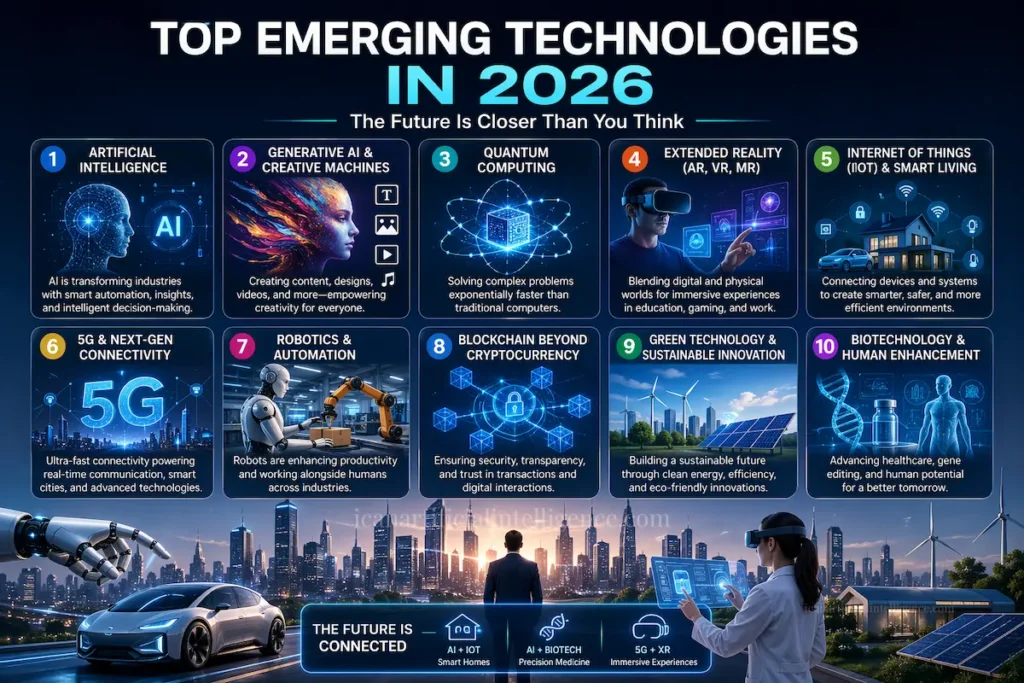
1. Artificial Intelligence Everywhere (AI Integration)
Artificial Intelligence is no longer limited to research labs—it’s embedded in daily life.
Key Developments:
- AI-powered personal assistants
- Smart automation in workplaces
- AI-driven decision systems
Real-World Impact:
AI is now used in:
- Healthcare diagnostics
- Financial forecasting
- Customer service automation
Opportunity:
- Build AI-powered tools
- Start AI automation services
- Use AI for content, coding, and business scaling
2. Generative AI & Creative Machines
Generative AI has become one of the most disruptive technologies.
What It Does:
- Generates text, images, videos, and music
- Assists in design, storytelling, and marketing
Why It Matters:
It democratizes creativity—anyone can create high-quality content without specialized skills.
Use Cases:
- Marketing campaigns
- Content creation
- Game design
Monetization Angle:
- Sell AI-generated content
- Offer creative services
- Build AI-driven content platforms
3. Quantum Computing (Early but Powerful)
Quantum computing is still in its early stages but holds massive potential.
What Makes It Different:
Unlike classical computers, quantum computers process complex problems exponentially faster.
Potential Applications:
- Drug discovery
- Cryptography
- Climate modeling
Reality Check:
Still not mainstream—but important for the future.
4. Extended Reality (XR): AR, VR, and MR
Extended Reality combines:
- Augmented Reality (AR)
- Virtual Reality (VR)
- Mixed Reality (MR)
Where It’s Used:
- Gaming
- Education
- Remote work
- Training simulations
Future Vision:
Digital and physical worlds will merge seamlessly.
Business Opportunity:
- Virtual stores
- Digital experiences
- Metaverse-related platforms
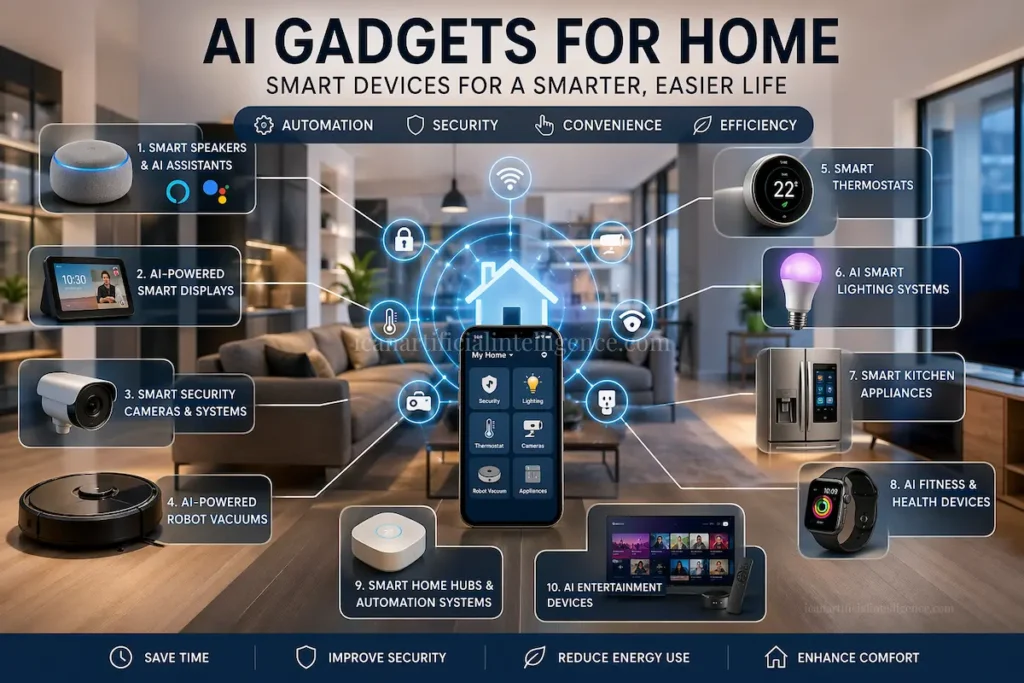
5. Internet of Things (IoT) & Smart Living
IoT connects everyday devices to the internet.
Examples:
- Smart homes
- Wearable devices
- Connected cars
Benefits:
- Automation
- Real-time monitoring
- Energy efficiency
Future Trend:
Everything—from refrigerators to cities—will become interconnected.
6. 5G & Next-Gen Connectivity
Fast internet is the backbone of modern technology.
What 5G Enables:
- Faster data speeds
- Low latency
- Real-time communication
Impact:
- Autonomous vehicles
- Smart cities
- Remote surgeries
What’s Next:
Research into 6G has already begun.
7. Robotics & Automation
Robots are becoming smarter and more adaptable.
Applications:
- Manufacturing
- Healthcare
- Logistics
- Household automation
Trend:
Human + robot collaboration instead of replacement.
8. Blockchain Beyond Cryptocurrency
Blockchain is more than just digital currency.
Key Uses:
- Secure transactions
- Supply chain tracking
- Digital identity
Industries Using It:
- Finance
- Healthcare
- Logistics
Opportunity:
Build decentralized apps (dApps) or blockchain-based solutions.
9. Green Technology & Sustainable Innovation
Sustainability is now a global priority.
Emerging Solutions:
- Renewable energy tech
- Carbon capture systems
- Energy-efficient computing
Why It Matters:
Technology must solve environmental challenges—not create them.
10. Biotechnology & Human Enhancement
Biotech is revolutionizing healthcare and human capabilities.
Innovations:
- Gene editing
- Personalized medicine
- Bioengineering
Impact:
- Longer lifespans
- Better disease prevention
- Advanced treatments
How These Technologies Connect
These technologies don’t evolve in isolation—they amplify each other.
Example:
- AI + IoT → Smart homes
- AI + Biotech → Precision medicine
- 5G + XR → Immersive experiences
The future is about integration, not isolation.
How to Prepare for the Future
You don’t need to master everything—but you should:
1. Stay Informed
Follow tech trends and updates regularly.
2. Learn Core Skills
Focus on:
- AI basics
- Data literacy
- Digital tools
3. Experiment with Tools
Hands-on experience beats theory.
Conclusion: The Future Is Already Taking Shape
Emerging technologies in 2026 are not isolated innovations they are part of a larger transformation that is reshaping industries, economies, and daily life. From artificial intelligence and biotechnology to quantum computing and smart connectivity, these advancements are redefining what is possible.
What makes this moment unique is not just the speed of innovation, but the convergence of technologies. Systems are becoming more connected, more intelligent, and more capable of solving complex real-world problems. As a result, individuals and businesses that understand and adopt these technologies early will have a significant advantage.
The key takeaway is simple:
You don’t need to master every technology but you do need to stay aware, adaptable, and willing to learn.
The future is not a distant concept anymore. It is being built right now—and those who engage with it today will help shape what comes next.
References & Further Reading
To ensure accuracy and provide deeper insights, this article is based on research and reports from leading global organizations:
- McKinsey & Company – Technology and innovation trend reports
- Gartner – Emerging technology insights and forecasts
- World Economic Forum – Future of technology and global transformation reports
- Stanford University – AI Index Report and technology research
- MIT Technology Review – Analysis of emerging technologies
- IEEE – Research on engineering and technological advancements
- International Data Corporation (IDC) – Global tech and innovation forecasts